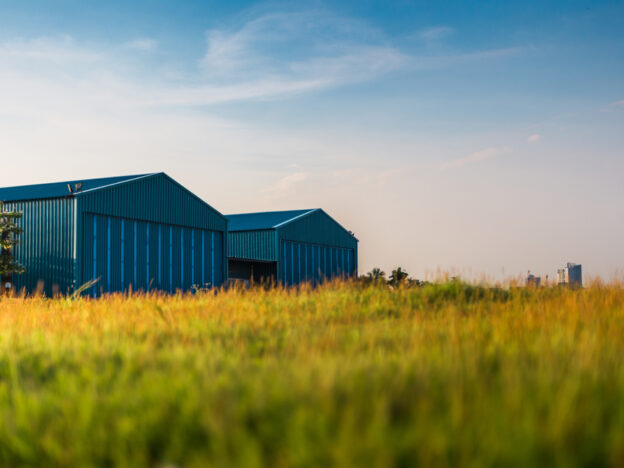
The government has introduced significant changes to permitted development rights for agricultural buildings, aiming to simplify the process of converting barns and outbuildings for residential and commercial uses. These updates, implemented on May 21st, 2024, offer exciting prospects for Agricultural land owners and Rural Estates with Agricultural property and Developers seeking new opportunities while promoting responsible land use.
Key Changes:
Expanded Conversion Options- Both Class Q (dwellings) and Class R (commercial):
Offers broader conversion possibilities. Class Q now permits up to 10 dwellings (previously 5) with a maximum total area of 1,000 square meters (sqm) and a 150 sqm limit per dwelling. Importantly, even barns no longer used for agriculture are now eligible for conversion under Class Q.
Class R Gets a Boost:
Previously limited to specific commercial uses, Class R now allows conversions for “General Industrial” and “Outdoor Sport and Recreation” developments. Additionally, the size limit has been increased to 1,000 sqm, enabling larger agricultural units to be repurposed for a broader range of uses, including hotels.
Larger Agricultural Developments, Part 6 Classes A and B:
Permitted development rights for agricultural use have also been revised. These changes allow for larger structures by increasing the permitted ground area and, for Class B, raising the maximum permissible increase in a building’s cubic content.
Safeguarding Historical Sites:
The new regulations exclude scheduled monuments from permitted development rights, requiring planning permission for any alterations to these protected structures.
Transitional Arrangements:
Developments that no longer qualify for permitted development rights under the new rules will be granted a 12-month grace period to proceed under the previous regulations.
These changes are expected to revitalise agricultural buildings and foster economic opportunities in rural areas. However, it’s important to note that the Planning Portal online application system is still being updated to reflect these changes. While they work diligently to implement the modifications, a short delay might occur before the system is fully functional.
These recent government reforms to permitted development rights for agricultural buildings unlock a wealth of conversion opportunities.
Whether you’re a landowner, developer, or architect, our team of experienced Building Surveyors, Project Managers, Quantity Surveyors, and CDM advisors is here to help you navigate the new landscape and turn your vision into reality.
Key Changes:
Expanded Conversion Options- Both Class Q (dwellings) and Class R (commercial):
Offers broader conversion possibilities. Class Q now permits up to 10 dwellings (previously 5) with a maximum total area of 1,000 square meters (sqm) and a 150 sqm limit per dwelling. Importantly, even barns no longer used for agriculture are now eligible for conversion under Class Q.
Class R Gets a Boost:
Previously limited to specific commercial uses, Class R now allows conversions for “General Industrial” and “Outdoor Sport and Recreation” developments. Additionally, the size limit has been increased to 1,000 sqm, enabling larger agricultural units to be repurposed for a broader range of uses, including hotels.
Larger Agricultural Developments, Part 6 Classes A and B:
Permitted development rights for agricultural use have also been revised. These changes allow for larger structures by increasing the permitted ground area and, for Class B, raising the maximum permissible increase in a building’s cubic content.
Safeguarding Historical Sites:
The new regulations exclude scheduled monuments from permitted development rights, requiring planning permission for any alterations to these protected structures.
Transitional Arrangements:
Developments that no longer qualify for permitted development rights under the new rules will be granted a 12-month grace period to proceed under the previous regulations.
These changes are expected to revitalise agricultural buildings and foster economic opportunities in rural areas. However, it’s important to note that the Planning Portal online application system is still being updated to reflect these changes. While they work diligently to implement the modifications, a short delay might occur before the system is fully functional.
These recent government reforms to permitted development rights for agricultural buildings unlock a wealth of conversion opportunities.
Whether you’re a landowner, developer, or architect, our team of experienced Building Surveyors, Project Managers, Quantity Surveyors, and CDM advisors is here to help you navigate the new landscape and turn your vision into reality.
Related posts
How to Get Building Safety Regulator Remediation Applications Right First Time
Why BSR remediation applications are delayed and how clearer, coordinated submissions can improve approval times.
Read MoreCelebrating Professional Growth: Kevin Bashford Achieves His MSc in Building Conservation
MacConvilles is proud to celebrate Kevin Bashford’s achievement of his MSc in Building Conservation (Pass with Merit). His two‑year journey — combinin
Read More


